

What you will learn: how to evaluate glossy printed sticker sheets and adhesives for long‑wear salon add‑ons, using the Luxury Halloween Sticker (T-590) as the sample substrate. This article focuses on substrate build, backing and finish so you can select stickers that hold through service without compromising natural nail appearance.
Read the substrate, not the art
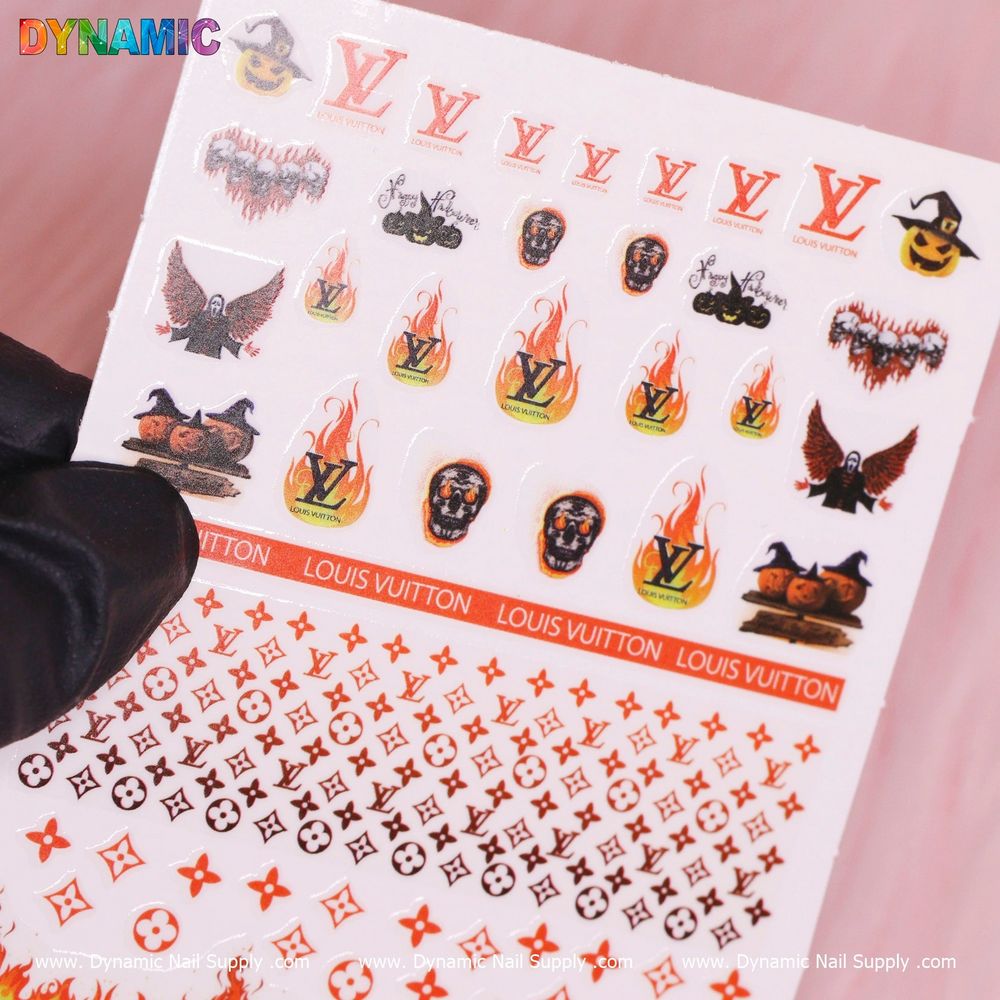
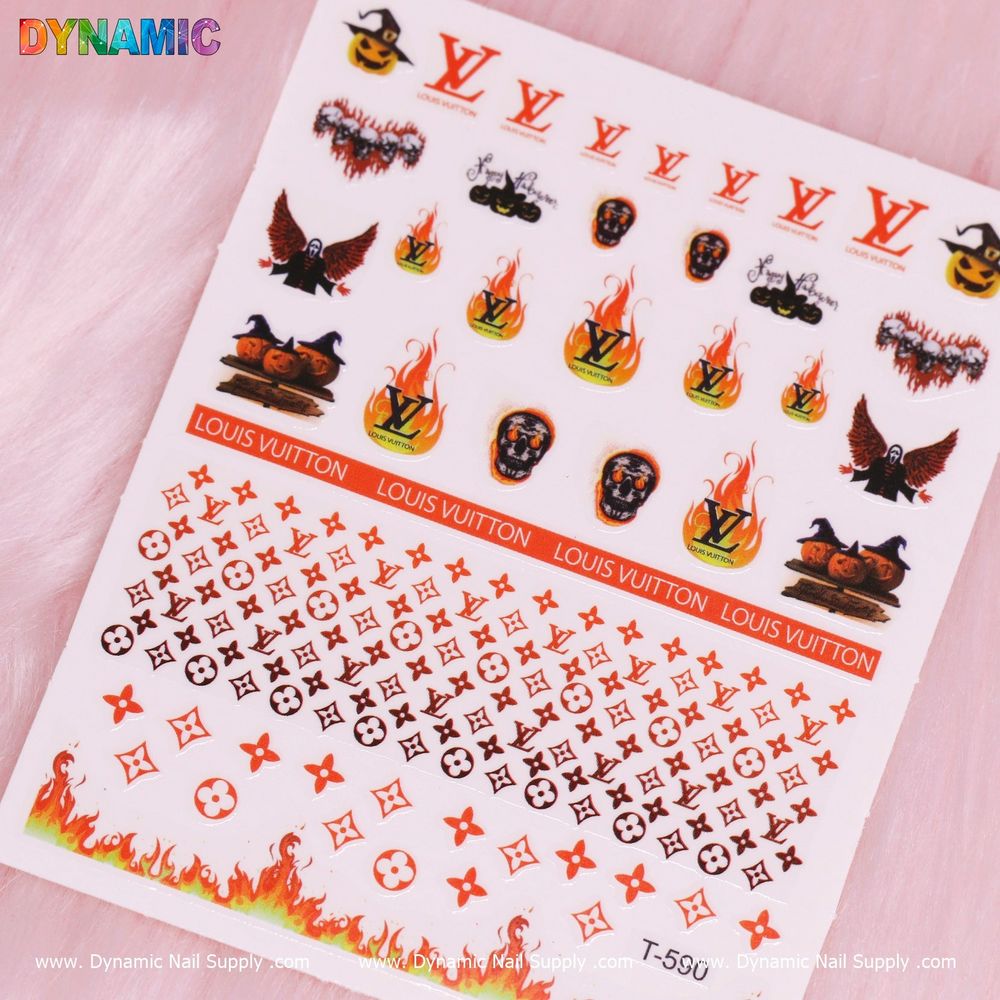
When you inspect a printed sticker sheet for salon use, treat the artwork and the material as separate decisions. The Luxury Halloween Sticker (T-590) offers a clear example: glossy printed stickers on white backing with a warm palette dominated by red‑orange and flame tones and black accents. That visual gives you placement ideas, but your selection criteria should focus on three material factors: the print surface, the backing and the adhesive system.
Print surface and finish: why glossy matters
Glossy printed surfaces behave predictably under topcoat. They are smooth and non‑holographic, which means a consistent reflective plane for sealing. For natural nails you want a finish that layers without trapping air and that allows thin, even topcoat coverage. Key checks:
- Surface smoothness: run a fingertip lightly across the sticker on the backing. A smooth glossy face lays flat; textured or embossed faces resist thin topcoats and can show seams.
- Color saturation vs. bleed risk: highly saturated inks, like the red‑orange monogram pattern on the T‑590, can appear vivid on a gloss print. Ensure the ink does not feel tacky — tacky ink can interfere with curing topcoats.
- Edge reflectivity: glossy sheets produce bright edge highlights under lamp. That helps you spot lifted edges during curing and follow a precise sealing path.
Backing and transfer ease
White backing sheets are common in printed sticker sets. They give strong contrast for tiny decals and make fine details easier to pick up. Evaluate these points:
- Liner stiffness: a slightly rigid white backing keeps the sheet flat while you work, improving placement accuracy. Too flexible a liner can fold and force the decal to bend during transfer.
- Release characteristic: a reliable release lets you lift small flame icons or micro monograms without tearing. Practice with a few motifs from the sheet to check whether the decal separates cleanly.
- Visibility: white backing highlights color contrast — with bright red‑orange and lime green fills on the T‑590, you’ll see details clearly under task lighting.
Adhesive strength: balance durability and removability
The adhesive system determines whether a sticker becomes a durable salon add‑on or a short‑lived decoration. For natural nail services you need adhesives that bond to properly prepped keratin but release cleanly when intentionally removed. When assessing adhesive claims, test these properties:
- Initial tack: moderate tack helps tiny icons stay put during positioning. Excessive initial tack complicates micro‑placement and can distort the decal.
- Cohesive strength: the glue should resist lift under daily wear without gumming the natural plate when you remove it with adhesive solvent or oil.
- Compatibility with topcoats: adhesives that soften or run when polymer topcoats are applied lead to migration and edge lifting. On a glossy print like the T‑590, you want an adhesive that tolerates thin, even topcoat layers.
Match substrate to service type
Decide how you will use the sticker: surface accent, embedded in gel, or under thin layer topcoat. Each use demands a slightly different substrate.
- Surface accent on natural nails: choose glossy printed stickers with moderate adhesive and a clean release. The white backing and vivid palette of the T‑590 suit bold single‑nail accents over matte or glossy backgrounds.
- Overlay with builder gel: only use stickers that have been tested for gel compatiblity. Smooth glossy faces are easier to cover without trapping air, but confirm the adhesive does not react with uncured gel chemistry.
- Negative‑space tips and micro accents: choose sheets with small precision decals and a stable liner to support micro placement. The T‑590 includes tiny monogram rows and flame icons that work for this use when the liner allows steady pick‑up.
Application protocol for long wear
Use a repeatable sequence to maximize lifespan while protecting natural nails. Keep the steps minimal and technical.
- Prep: clean the nail with a non‑oil remover, and lightly buff the surface to remove shine. Natural nails should be matte‑ready for adhesion.
- Place: lift decals from the white backing with tweezers or a wax pencil and position. Work quickly if adhesive has high initial tack.
- Seal: apply a thin even layer of compatible topcoat. For glossy-printed substrates, thin layers prevent pooling and edge lift. Cure per product instructions if using a cured topcoat.
- Edge check: inspect under lamp for micro lifts created by edge reflectivity; recoat immediately if any edge shows separation.
Testing checklist before adding to your menu
Run these simple salon tests with one sheet before ordering stock:
- Place a point‑accent decal over a natural, prepped nail and topcoat as you plan to offer it.
- Wear simulation: ask a colleague to simulate typical hand use for 48 hours and report any lift.
- Removal trial: verify the decal releases cleanly with your standard remover and does not delaminate the nail surface.
Practical safety and handling notes
Stickers are non‑toxic decorative materials, but follow basic salon hygiene: store sheets flat away from heat and direct sunlight, discard any sheet where backing wrinkles or adhesive darkens, and use tools cleaned between clients to avoid cross contamination.
Mini glossary
- Release: how easily a decal separates from its liner.
- Tack: the initial stickiness of the adhesive.
- Cohesive strength: the adhesive’s resistance to lifting under stress.
- Gloss finish: a smooth reflective surface that aids even sealing.
To inspect a real sample for these traits, examine the Luxury Halloween Sticker (T-590) sheet: glossy printed white backing, vivid red‑orange monogram pattern and flame icons with bright accent fills. Test one sheet in your workflow and note performance before buying stock; the sheet is priced at $2 and prices may change. For a quick reference to the exact item in your inventory, see this listing:
Explore the product in your own workflow and decide if this glossy white‑backed style suits your long‑wear menu.