

What you’ll learn: a compact, salon-ready workflow to clean metal nail charms that feature mixed silver and gold finishes plus faceted clear rhinestones. This article shows safe cleaning agents, sterilization limits, handling steps, and finish protection so your 48-piece star-and-moon set stays service-ready without harming chrome-like metal or rhinestone accents.
Why this set needs special handling
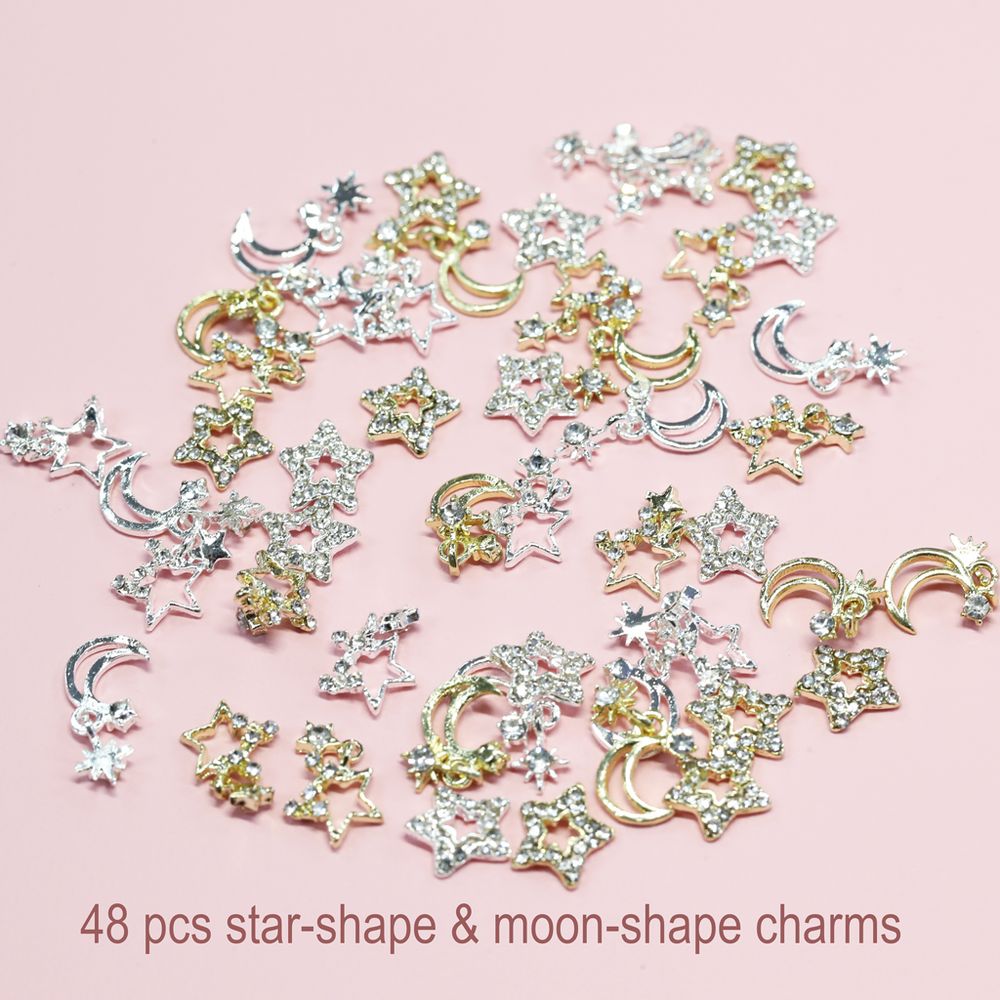
You’re working with a 48-piece mixed-metal star and crescent moon set that pairs chrome-like silver and gold pieces with faceted clear rhinestones. Mixed metals and glued-on stones respond differently to solvents, heat, and mechanical abrasion. Treat the set as small metal jewelry rather than a single-use acrylic tool: clean to remove oils and debris, disinfect within salon standards, and avoid processes that strip plating or loosen stones.
Step-by-step cleaning and routine maintenance
- Pre-inspect. On arrival to your prep area, spread charms on a soft, pale surface so you can spot missing stones, open settings, or bent prongs.
- Dry debris removal. Use a soft, lint-free brush to sweep dust and nail residue away. Work over a tray — these pieces are small and drop-prone.
- Low-pH soak. Prepare a mild detergent solution (neutral salon soap diluted in warm water). Submerge for up to two minutes to loosen oils and residue. Do not agitate vigorously; avoid long soaks that can weaken glue holding rhinestones.
- Rinse and inspect. Rinse gently with warm water and inspect each piece under bright light. If a stone looks loose, set it aside for repair before reuse.
- Dry thoroughly. Pat with a lint-free towel, then air dry on a soft tray. Ensure contact points and rhinestone settings are bone-dry before any disinfectant step.
Disinfection limits and recommended agents
Salon sanitation standards require effective disinfection between clients, but not all chemical disinfectants are safe for plated metal or glued stones. Follow this protocol:
- Use EPA-registered hospital-grade disinfectants that list compatibility with metal tools. Avoid prolonged immersion in high-alcohol blends or concentrated oxidizers; these can dull chrome-like finishes and degrade adhesive bonds.
- Contact time. Follow the manufacturer’s labeled contact time. For small metal accessories, a wipe-and-spray method with adequate dwell time is often less damaging than continuous immersion.
- Avoid autoclave or heat sterilization. High heat and pressure can delaminate plating and loosen glued rhinestones. Do not attempt steam sterilization on these charms.
- Spot testing. Before a salon-wide change in disinfectant, test a single charm for 24 hours to confirm there’s no discoloration, pitting, or stone loss.
Protecting faceted stones and chrome finishes
Faceted clear rhinestones reflect light and can trap cleaning residue. Chrome-like surfaces show abrasion quickly. Preserve both by following these controls:
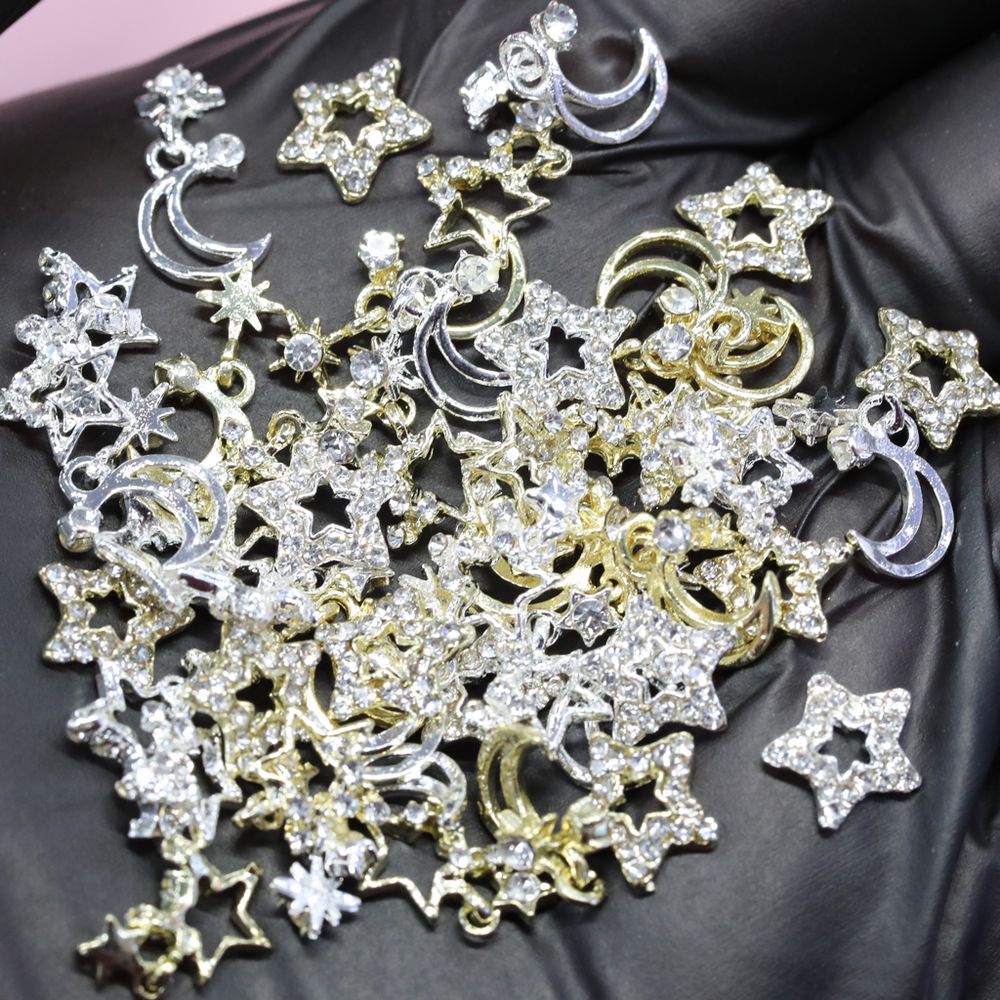
- Gentle tools. Use soft nylon brushes and microfiber cloths. Metal brushes or abrasive pads will scratch finishes.
- Minimize solvent exposure. Keep acetone, heavy degreasers, and concentrated alcohols away from rhinestone settings and plated areas. If acetone is required on surrounding nail surfaces, protect charms separately.
- Secure storage during services. Keep charms in individual compartments or soft-lined magnetic trays during application to prevent friction wear from other metal pieces.
- Repair protocol. For loose stones, use a jewelry-grade adhesive applied sparingly with a toothpick; cure per adhesive instructions. Isolate repaired pieces until fully set.
Workflow integration: what to do between clients
- Collection. Remove used charms immediately after service with non-abrasive tweezers and deposit into a labeled collection tray.
- Categorize. Separate used, intact, and damaged items. Discard any pieces with severe plating loss or multiple missing stones — small metal accessories are inexpensive, and reusing compromised pieces risks client dissatisfaction.
- Clean and disinfect as above. After the mild detergent soak and rinse, perform the disinfectant step per label, using wipes or sprays to avoid long immersion.
- Storage for reuse. Store clean charms in sealed compartments, organized by metal color and shape. A soft, pale background helps you visually confirm stone integrity and finish quality before the next client.
Safety and handling notes
- Tiny pieces are a choking hazard — keep them away from children and visibly mark containers during salon use.
- Wear nitrile gloves while handling disinfectants and when inspecting used charms to prevent cross-contamination.
- If a charm’s setting is visibly corroded or a stone falls out, treat the piece as compromised and remove it from the reuse pool.
Mini glossary
- Plating: Thin metal layer on base metal that gives chrome-like silver or gold appearance.
- Contact time: Required time a disinfectant must remain wet on a surface to be effective.
- Rhinestone setting: The glued or pronged area that secures a faceted stone to the metal piece.
- Non-immersion disinfection: Cleaning method using wipes or sprays to limit solvent contact with delicate finishes.
These mixed-metal star and moon charms perform best when you balance effective disinfection with gentle handling. Keep a small rotation of reserve charms while others cycle through cleaning, and replace any pieces that show finish loss or loose stones. The 48-piece mixed-metal set is affordable — currently priced at $10 though prices may change — so maintain quality by retiring compromised pieces promptly.
For salon use, adopt the steps above and label your trays so every technician follows the same protocol. If you need a reference while organizing your kit, consider how the 48 pcs star-and-moon set fits into your rotation to maintain both appearance and sanitation.
Include the 48 pcs star and moon charms in your service rotation and label cleaned sets clearly so everyone follows the same maintenance routine: 48 pcs star and moon charms